Introduction:
Scenic fabrication is the art of transforming design concepts into physical sets, props, and immersive environments for theater, film, events, and theme parks. The materials used in fabrication play a critical role in determining the visual appeal, durability, safety, and functionality of the set. With advances in technology, designers now have access to innovative materials that allow for more creativity and efficiency.
1. Lightweight Foams and Polymers
High-Density Foams
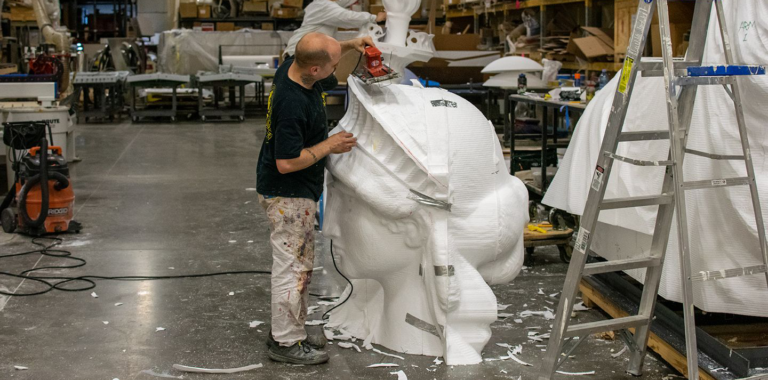
Foams are widely used for creating sculpted elements, textures, and large props. High-density foam is durable yet lightweight, allowing designers to build oversized pieces without excessive weight.
Flexible Polymers
Polymers provide flexibility for complex shapes and curves. They are also easy to paint, carve, and mold, making them ideal for decorative elements or realistic textures such as rocks, foliage, or fantasy props.
2. Composite Materials
Fiberglass and Resin Composites
Fiberglass and resin composites combine strength and lightweight properties, making them perfect for structural set elements, outdoor installations, and long-lasting props. These materials resist weathering, moisture, and wear, which is critical for high-traffic areas or theme park attractions.
Carbon Fiber and Reinforced Plastics
For specialized applications, carbon fiber or reinforced plastics provide high strength with minimal weight. They are often used in moving set pieces or interactive elements where durability and safety are crucial.
3. Eco-Friendly and Sustainable Materials
Reclaimed Wood and Bamboo
Sustainable materials like reclaimed wood, bamboo, or recycled plastics are increasingly used in scenic fabrication. They reduce environmental impact while still providing aesthetic and structural integrity.
Biodegradable Composites
Emerging biodegradable materials allow designers to create temporary or single-use scenic elements with minimal environmental footprint, perfect for events or exhibitions.
4. Advanced Coatings and Textures
Flame-Retardant Paints and Coatings
Fire safety is essential in theaters and public spaces. Modern coatings make materials flame-retardant, water-resistant, and durable while enhancing texture and visual appeal.
Specialty Textures
Using textured coatings, flocking, or molding compounds, designers can simulate stone, metal, wood, or organic surfaces, adding realism to sets without the cost or weight of natural materials.
5. 3D-Printable Materials
PLA, ABS, and Resin Filaments
3D printing enables designers to rapidly create small-scale props, detailed ornaments, and prototype pieces. Materials such as PLA, ABS, or photopolymer resins provide precision and flexibility for intricate designs.
Custom Blends
Advanced 3D printing allows the use of custom material blends, such as flexible filaments or composite resins, enabling designers to combine durability, flexibility, and texture in a single piece.
6. Metal Alloys and Lightweight Steel
Structural Supports
Aluminum, steel, and other lightweight alloys are often used for frames, supports, and moving set pieces. They provide stability while keeping weight manageable.
Decorative Applications
Thin sheets or metal foils can be used to simulate metallic surfaces, armor, or machinery, combining visual appeal with structural integrity.
Conclusion: Pushing the Boundaries of Design
Innovative materials are transforming scenic fabrication, allowing designers to create more immersive, durable, and realistic environments than ever before. From lightweight foams and polymers to eco-friendly composites, advanced coatings, 3D-printable filaments, and metal alloys, each material opens new possibilities for creativity and functionality. By embracing these materials, scenic fabricators can deliver stunning, safe, and long-lasting sets for theater, film, events, and theme parks.
About the Author